
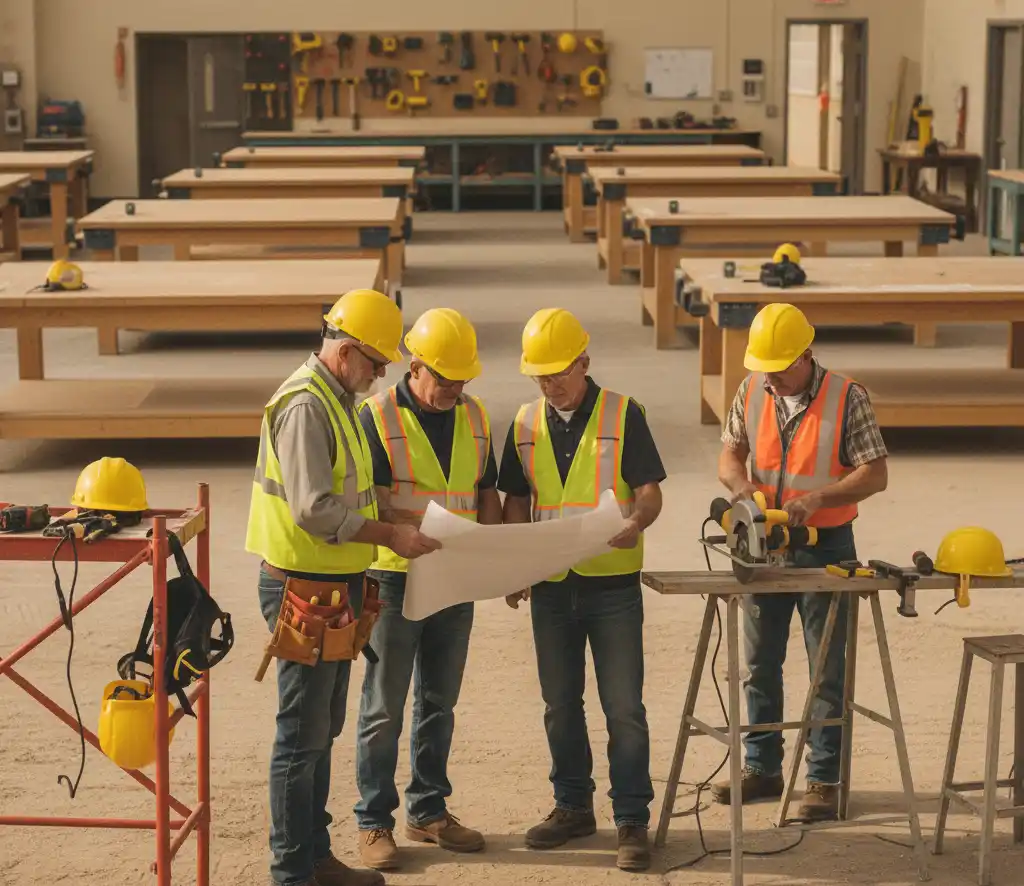
If you’ve been watching the market lately, you know the story: housing affordability is getting crushed. Everyone’s talking about interest rates, but there’s another force behind the scenes that’s hammering prices the construction labor shortage.
And as a builder who lives this every day, I can tell you: this is one of the biggest factors pushing costs higher.
Right now in the U.S., the industry is short around 350,000 skilled workers every month.
That’s framers, electricians, plumbers, finish carpenters the people who actually build the homes families live in. When you’re missing that many workers, two things happen fast:
1. Jobs slow down
2. Costs go up
Both are happening right now.
Why This Shortage Is Different
This isn’t just a post-COVID hiccup. This is structural.
Fewer young people are entering the trades, older craftsmen are retiring, and vocational training has been underfunded for decades. The pipeline is dry. Every builder I talk to whether they’re doing ten houses a year or a hundred is saying the same thing:
“We can’t hire fast enough. And when we do, we’re paying more than ever.”
Some trades have seen 20–50% wage increases over the last couple years. It’s great that tradesmen are finally earning what they deserve but it also adds tens of thousands of dollars to the cost of every home.
How This Impacts Housing Costs
Here’s the part buyers feel immediately:
– Homes take longer to complete
– Fewer homes get built
– Demand stays high
– Prices rise
NAHB estimates this shortage kept nearly 19,000 homes from being built last year. Think about that. In a market already starved for inventory, we’re putting even fewer homes into the system.
Less supply + steady demand = higher home prices.
Higher build costs + longer timelines = higher asking prices.
Why It Matters for Montana Buyers and Sellers
In Montana especially around Billings the impact is multiplied.
We’re already a fast-growing state. People are moving here for lifestyle, space, and affordability compared to the coasts. But if builders can’t staff their crews, and trades cost more every quarter, then prices will keep creeping upward.
For buyers, that means the longer you wait, the more expensive homes become even if rates come down.
For sellers, it means your property is sitting in a market where replacement cost keeps rising. That gives your home more long-term stability and value.
What Needs to Change
If we want real affordability again, here’s what has to happen:
– Bring vocational training back
– Introduce young people to the trades early
– Streamline regulations that slow down building
– Adopt more efficient building methods (off-site construction, modular, panelized framing, etc.)
We need more skilled workers, plain and simple. Until that pipeline is rebuilt, the cost of new housing is going to stay elevated.
Bottom Line
Housing affordability isn’t just a “rate problem.”
It’s a labor problem, a supply problem, and a capacity problem.
And until America solves the skilled-labor shortage, home prices are going to reflect that reality.
If you’re thinking about buying, building, or selling in this market now is the time to understand the forces moving beneath the surface. The labor crunch is real, it’s here, and it’s shaping the future of housing
